
Behind a Superyacht Itinerary: What a Shoreside Purser Does Before a Guest Trip

When guests receive their itinerary, they usually see a clean, considered document. Each day is mapped out, the marina berths confirmed and the restaurant reservations in place, making the route look effortless.
What they don't see are all the conversations, decisions and moving parts that happen long before the itinerary lands in their inbox.
Over the past few weeks we've been planning several owner trips around the Mediterranean, and it's a reminder that the itinerary itself is rarely the hard part. The real work starts long before that, quietly taking shape behind the scenes as every detail is considered, challenged and refined.
A common misconception about superyacht itinerary planning is that it's just about deciding where the yacht should go, whilst in reality, the itinerary is the final product. Behind it sits guest and crew logistics, operational planning, financial management, customs requirements, supplier coordination and countless smaller decisions that all have to line up before guests ever set foot onboard. And when it's done well, nobody notices.
The Captain isn't chasing paperwork between guest activities. The Chef already knows what's needed to provision correctly. The interior team knows exactly who's arriving, what they like, and which occasions matter. Local agents have the documentation in hand, and if the weather turns tomorrow, there's already a second plan sitting in the background.
That's what a Purser does. It's not about reacting when something goes wrong, but making sure the crew never have to.
The Guest Preferences, Where Every Guest Trip Begins

Cap Ferrat, peninsula on the French Riviera
Every owner and charter guest trip starts with preferences. Before we think about cruising distances, berth availability or restaurant reservations, we start with the people. No two guests use the yacht the same way, and that shapes almost every decision that follows.
Some families want to spend whole afternoons at anchor in a quiet bay, every toy in the water, others would rather be ashore, taking long lunches and seeing a place at their own pace. A few guests return to the same favourite restaurants season after season; others want somewhere they've never been. Then add children, birthdays, anniversaries, dietary requirements, extended family joining partway through, or friends flying in for a few days - and the plan quickly becomes far more involved than picking where to go.
This is where most of the work actually happens.
We finalise the guest list, book airport and helicopter transfers, and check passport details wherever they're needed. Individual requests are logged and passed to the right department, so everyone onboard knows what's coming well before the guests do. The Chef can start building menus around real preferences rather than guesswork, and the earlier all of this lands, the more time the crew has to get ahead of it.
However, one thing we've learnt over the years is that these conversations rarely stay the same.
Guests change their minds, a destination gets swapped a week before departure, guest numbers go up, or someone decides to head home early. Plans that feel settled shift, sometimes more than once, and it happens constantly, which is why flexibility matters as much as organisation.
A well-planned guest trip is designed around the people coming onboard. Everything else follows from that.
Building a Superyacht Itinerary That Works
With the guest preferences settled, the focus shifts to the vessel itself.
From the outside, building a superyacht itinerary can look relatively straightforward: pick a handful of good destinations, join them up and start booking, but in practice it rarely is. A route has to work for the vessel as much as it works for the guests, and a day that looks perfect on paper still has to hold up against the hours at sea and the fuel it takes to keep to them.
Before a route is confirmed, every leg is checked against:
realistic cruising times and the nautical miles between stops
fuel consumption and range across the programme
overnight anchorages chosen for shelter and suitability
marina berths, reserved early, since prime-season availability is limited
customs and clearance requirements wherever borders are crossed
weather contingency ports, identified before they're needed
the Captain's read on what's operationally feasible
One small change quickly ripples through everything else. A guest decides they'd like an extra night in Capri, and the next marina booking has to move. Reservations shift, transfers are rebooked, provisioning slides back a day, local agents get updated ETAs, and the Captain has to decide whether the revised route still makes sense against the forecast.
The guests only ever see one finished itinerary, and it's one the bridge has already agreed is workable. Behind it there's always at least one alternative worked up, sometimes several, ready in the background. If the weather closes in, a berth we wanted isn't available, or guest plans change at short notice, we're not starting from scratch, we just move to the next plan.
Years onboard have shown us this is often what separates a stressful trip from one that feels calm from start to finish. A good contingency plan is one the guests never knew existed.
The Shoreside Reservations and Logistics That Sit Under the Itinerary

Rue du Safranier, Antibes
Once the route is agreed, the work moves ashore.
The days become a run of emails, messages and calls. Restaurant and beach club reservations are made to suit the guests, spa treatments and private trainers are arranged where wanted, along with guides, cultural visits or winery tours to match the trip. Helicopter transfers are booked, and local recommendations are gathered for each stop.
This is also where seasons spent working these waters earn their place: the table worth calling ahead for, the anchorage that suits this particular group, the spot that still holds up once you're standing in it. That kind of ground knowledge comes from having done the miles, not from a search result.
The real challenge isn't booking one reservation. It's coordinating dozens of moving parts so they all work together, while leaving enough flexibility for plans to change without disrupting the experience. On one recent owner's trip, before cruising from Antibes to Saint-Tropez, guests were offered two completely different ways to spend the morning: browsing the Marché Provençal or taking a chauffeured drive to Saint-Paul-de-Vence. Both options had already been organised, allowing the guests to decide on the day without the crew needing to make last-minute arrangements.
Underneath all of it runs a layer the guests never see. Local agents, drivers, restaurants, beach clubs and tour guides are all working from the same plan, with timings continually adjusted as the yacht's schedule evolves. When it's done well, everything simply appears effortless.
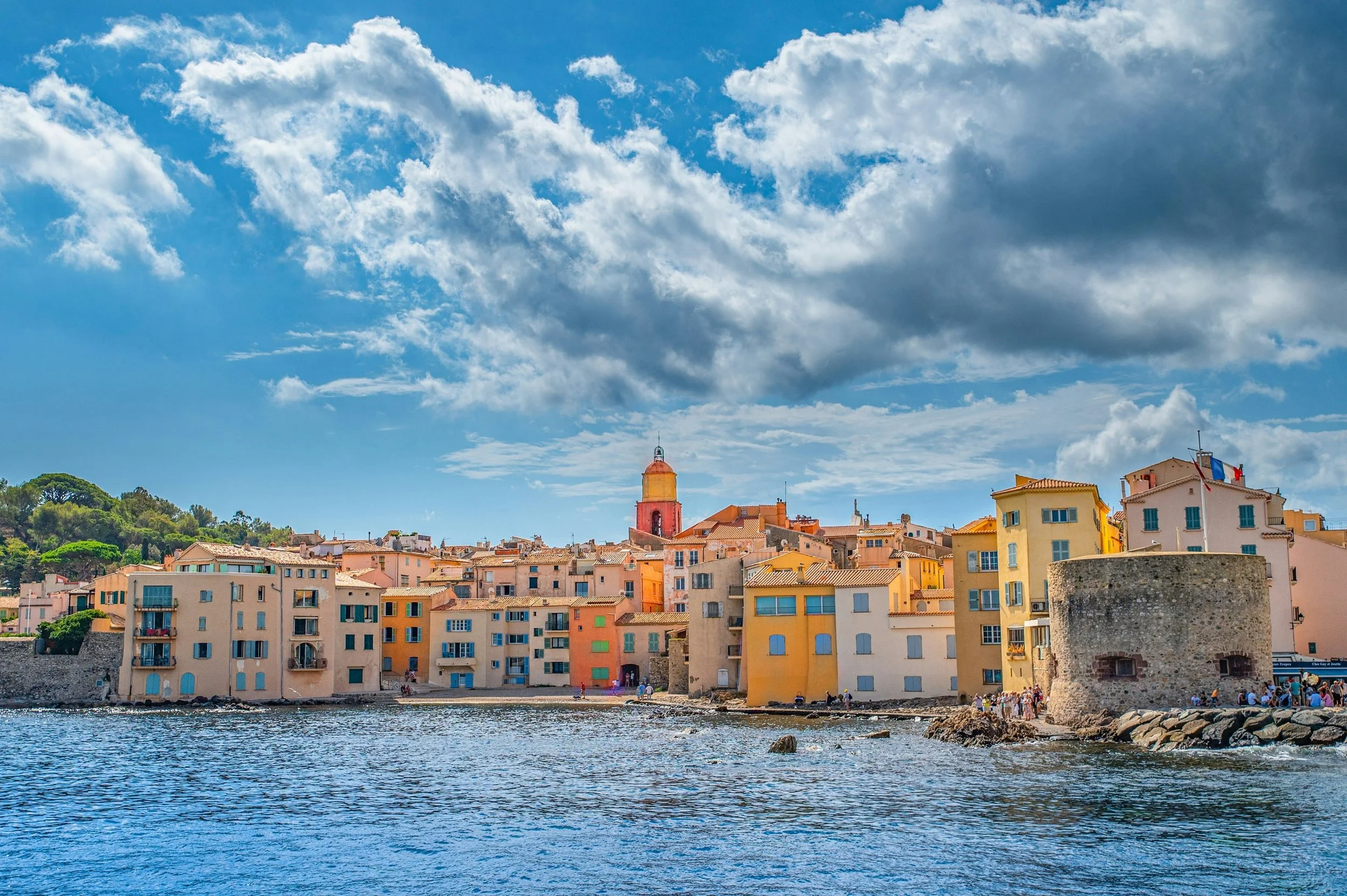
Saint-Tropez, costal town on the French Riviera
Customs, Clearance and Crew Certification
Underneath the guest-facing plan runs a layer of documentation that has to be right. Customs and port clearance paperwork is prepared ahead of each arrival, crew and guest manifests are compiled and kept current, passports are checked for validity and visa requirements confirmed for every destination on the route, well before anyone is standing in front of an official.
It's detailed, repetitive work, and the point of it is that it's done early. Filed and confirmed in advance, it's one less job the Captain or onboard purser has to deal with once guests are onboard.
The preparation doesn't stop with the paperwork. Before the trip begins, crew logistics also need to be locked in. Rotations are reviewed, temporary crew are organised where required, flights, transfers and accommodation booked, and arrivals carefully timed so everyone is onboard, rested and ready before the owner or charter guests arrive.
Behind the scenes, crew certification and compliance are already being managed long before the trip begins. Throughout the year, a Purser tracks expiry dates, organises renewals and ensures every crew member remains compliant with the vessel's requirements, flag state regulations and cruising area. It's another piece of preparation that's largely invisible, but essential to keeping the operation running smoothly.
Giving Captains Their Time Back
This is where a shoreside purser can make a real difference, particularly on yachts of around 30 to 70 metres that run without an onboard purser.
The admin doesn't disappear just because no one's aboard to handle it, it lands on the Captain, Chief Officer or Chief Stewardess instead, on top of everything else they're already carrying.
Every Captain knows the feeling, the guests head ashore for lunch and, for the first time all day, there's a window to catch up. Then the phone starts. Management has a question, the agent needs paperwork for the morning, and an owner request comes in that reshapes the afternoon. Before long the window's gone and the paperwork still hasn't been touched. It's part of running a yacht - but it's also the kind of work that doesn't need to happen onboard.
With a shoresider purser though, everything is already being handled ashore before it reaches the boat. So rather than squeezing admin in around the operation, the Captain gets to focus on the actual job: leading the crew, running the yacht, looking after the guests.
On larger yachts that already have a purser aboard, it works a little differently. We're not there to replace them, just to be another experienced pair of hands through a busy owner's trip or charter, or while they're on leave. Someone who already knows the pace onboard can pick things up without a long handover or another layer of management.
Next time the guests head ashore, the phone can stay quiet.
Managing Owner and Charter Accounts
Managing owner and charter accounts is one of the easiest responsibilities to move ashore and often one of the biggest time savers for a Captain.
Every yacht operates differently, some owners prefer detailed budgets and regular financial reporting whilst on trip, while others simply expect sensible spending, clear records and complete transparency. Understanding how each owner likes to work is just as important as managing the accounts.
Charters add another layer. APA accounts are updated throughout the trip, supplier invoices reconciled, guest expenditure recorded and receipts organised so the final reconciliation is straightforward. Owner accounts need the same attention, just managed differently.
Keeping everything updated in real time means the accounts stay current, supplier payments stay organised and the Captain isn't spending evenings sorting receipts after guests have gone to bed.
Sometimes the greatest value of a shoreside Purser isn't adding more to the operation, it's quietly taking something away.
Where a Shoreside Purser Fits Alongside an Onboard Team
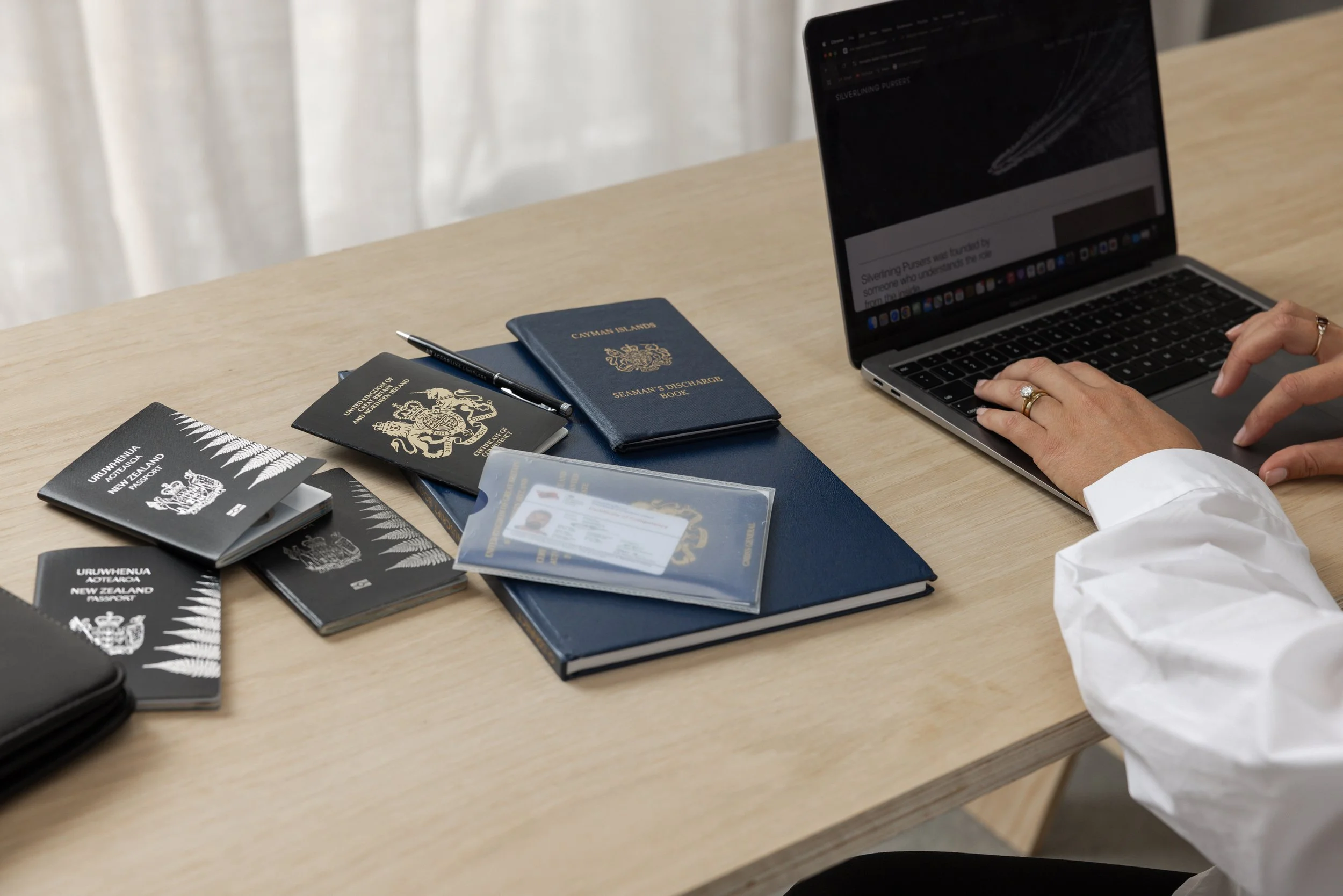
None of this requires being on the vessel. The research, routing, reservations, budgeting, paperwork and crew coordination can all be handled ashore, working closely with the Captain and onboard team. Remote, but not removed from how the boat actually operates.
That's where a shoreside purser sits. An extension of the team already onboard, taking the load off a crew that already has enough to carry. On some yachts that means running the full purser role remotely. On others, it's supporting an onboard Purser through busy periods, owner's trips or leave.
The itinerary is what everyone sees. The work behind it is what makes the trip run smoothly, and it's often what's worth handing to someone shoreside.
Onshore support. Onboard precision. If you'd like to take the pre-trip workload off your crew before the next owner's or charter trip, we'd love to hear from you. Get in touch.
Frequently Asked Questions
What does a shoreside Purser do before an owner's trip?
A shoreside Purser manages the work before guests arrive: guest logistics, superyacht itinerary planning, marina bookings, reservations, provisioning coordination, customs and clearance paperwork, owner or APA accounts, crew coordination, and ongoing communication with the Captain, management company, local agents and suppliers.
What's the difference between an owner's trip and a charter?
The planning is much the same, but the financial side differs. On an owner's trip, expenditure runs through the owner's account, with reporting tailored to how that owner prefers to operate. During a charter, everything runs through the APA, tracked and reconciled throughout the trip.
Can superyacht itinerary planning be managed remotely?
Absolutely. Almost all of it happens before the yacht leaves the dock, so it can be handled remotely. Working closely with the Captain keeps the itinerary aligned with how the yacht needs to run, while taking a lot of the admin off the crew.
How far in advance should trip planning begin?
The earlier the better. Popular marinas, beach clubs and restaurants book out months ahead in peak season, so early planning leaves time to build in contingencies if the weather or guest plans change.
Does a shoreside Purser replace an onboard Purser, or work alongside one?
Either. Some yachts use shoreside support instead of carrying a full-time Purser; others bring it in to back up their onboard Purser through busy periods or leave cover. Every yacht is different, and support is tailored to each vessel.